
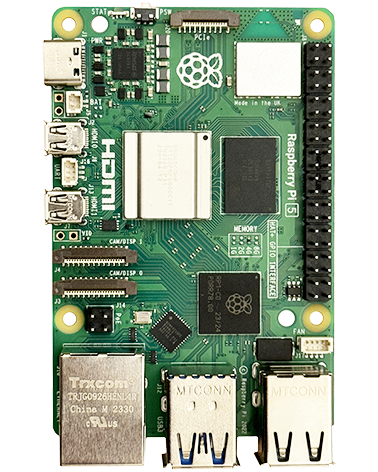
For Raspberry Pi with a 32-bit processor
| Name | C++ | Bytes | Range |
| bool | 1 | true or false | |
| signed char | int8_t | 1 | -128 to 127 |
| unsigned char | uint8_t | 1 | 0 to 255 |
| short int | int16_t | 2 | -32768 to 32767 |
| unsigned short int | uint16_t | 2 | 0 to 65535 |
| int | int32_t | 4 | -2147483648 to 2147483647 |
| unsigned int | uint32_t | 4 | 0 to 4294967295 |
| long int | int32_t | 4 | -2147483648 to 2147483647 |
| unsigned long int | uint32_t | 4 | 0 to 4294967295 |
| long long | int64_t | 8 | −9,223,372,036,854,775,808 to 9,223,372,036,854,775,807 |
| unsigned long long | uint64_t | 8 | 0 to 18,446,744,073,709,551,615 |
| float | 4 | +/- 3.4e +/- 38 (~7 digits) | |
| double | 8 | +/- 1.7e +/- 308 (~15 digits) | |
| long double | 8 | +/- 1.7e +/- 308 (~15 digits) | |
| wchar_t | 2 or 4 | 1 wide character |
For Raspberry Pi with a 64-bit processor
| Name | C++ | Bytes | Range |
| bool | 1 | true or false | |
| signed char | int8_t | 1 | -128 to 127 |
| unsigned char | uint8_t | 1 | 0 to 255 |
| short int | int16_t | 2 | -32768 to 32767 |
| unsigned short int | uint16_t | 2 | 0 to 65535 |
| int | int64_t | 8 | −9,223,372,036,854,775,808 to 9,223,372,036,854,775,807 |
| unsigned int | uint64_t | 8 | 0 to 18,446,744,073,709,551,615 |
| long int | int64_t | 8 | −9,223,372,036,854,775,808 to 9,223,372,036,854,775,807 |
| unsigned long int | uint64_t | 8 | 0 to 18,446,744,073,709,551,615 |
| long long | int64_t | 8 | −9,223,372,036,854,775,808 to 9,223,372,036,854,775,807 |
| unsigned long long | uint64_t | 8 | 0 to 18,446,744,073,709,551,615 |
| float | 4 | +/- 3.4e +/- 38 (~7 digits) | |
| double | 8 | +/- 1.7e +/- 308 (~15 digits) | |
| long double | 8 | +/- 1.7e +/- 308 (~15 digits) | |
| wchar_t | 2 or 4 | 1 wide character |
3 years ago
That’s why many of my long double C functions did not compile or work for I thought Raspberry Pis would support at least 80-bit floating-point numbers … Thanks so much for your two interesting tables !
5 years ago
Hi,
I have a question about the 64-bit processor. (int till unsigned long int)
How do you get xxx64_t with 4Bytes ? All the numbers are fitting to 64bit and 8Bytes.
But which information is correct?
(If I have a lag of information, maybe others have the same issue, and a short explanation under the sheet would be nice.)
5 years ago
Ooops you’re quite right, of course you don’t! That was a copy and paste typo error I think – corrected now, thanks